

The Fed Just Raised Rates: What It Means for Real Estate Investors in 2026
Published October 2026 | Awesome ROI Market Insights
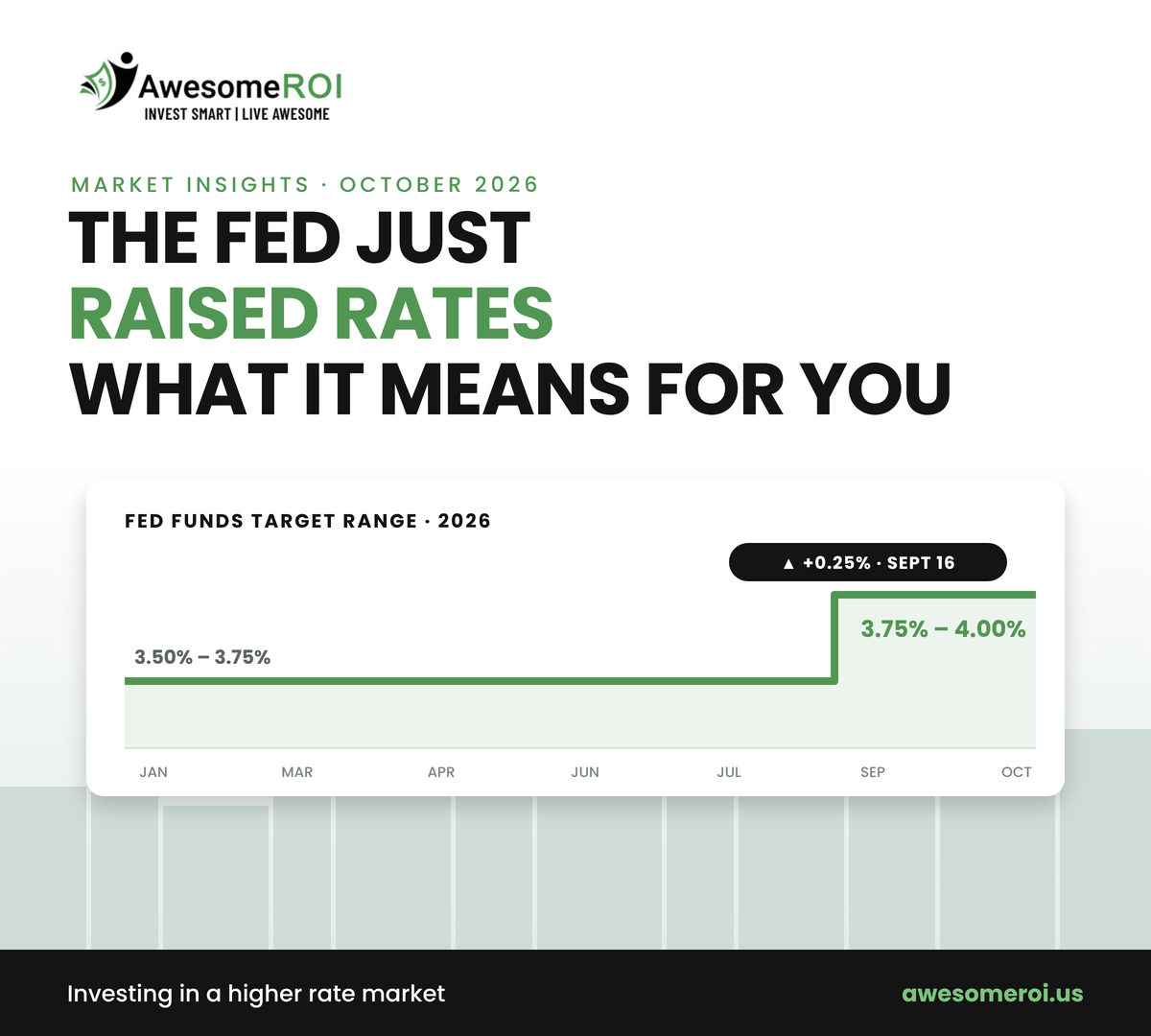
The Fed rate hike in September 2026 caught many real estate investors off guard. On September 16, the Federal Reserve raised its target range by a quarter point to 3.75% to 4.00%, citing inflation that remains elevated, according to the Fed’s official statement. In fact, it was the first move of the year after six straight meetings on hold. So, what does a higher rate world mean for people who invest in commercial real estate? At Awesome ROI, we think it changes which deals make sense, not whether real estate makes sense.
Where Rates Stand After the Fed Rate Hike
At first, many investors entered 2026 expecting rate cuts. Instead, the Fed held steady from January through July and then hiked. Meanwhile, the 10 year Treasury yield, which drives most commercial loan pricing, closed at 5.12% on October 20, per U.S. Treasury data. Next, the Fed meets again on October 27 to 28. Because of this, borrowing costs are likely to stay higher for longer than most people planned.
Higher Rates Separate Strong Deals From Weak Ones
Of course, when money is cheap, almost any property can look good on paper. However, when rates rise, the math gets honest. Marcus & Millichap notes that the gap between average cap rates and the 10 year yield has narrowed to about 180 basis points, which reduces the benefit of using debt, according to its September research brief. As a result, deals now need real income growth, not just cheap leverage, to work. For investors, that means looking hard at how a sponsor plans to raise income and how the debt is structured.
How the Fed Rate Hike Can Create Opportunity
Still, there is another side to this story. Expensive construction loans slow down new building. So, existing properties face less new competition, which can support occupancy and rents. In addition, some owners who borrowed at low rates now face refinancing costs 150 to 250 basis points above their original loans, according to PCBB. As a result, some of those owners will need to sell. Buyers with capital ready can find better pricing in that kind of market.
What the Fed Rate Hike Means for Passive Investors
If you invest passively, you do not take out the loan yourself. Still, the Fed rate hike affects you through the deals you join. First, higher debt costs can reduce cash flow, so ask how each deal’s loan is structured. Fixed rate debt and rate caps can limit surprises.
Second, higher rates can lower purchase prices, which may improve future returns for new buyers. Third, cash flow matters more than ever. As a result, look for properties with stable tenants and a clear plan to raise income. In short, a rate hike rewards careful underwriting and punishes guesswork.
How Awesome ROI Invests When Rates Are High
For this reason, we focus on properties where our in house team can directly grow income. That includes leasing up space, renewing leases at market rents, and adding new revenue streams. We also stress test our deals for higher interest costs before we commit. In short, we want returns driven by operations, not by a bet on falling rates. Explore our current offerings to see how we apply this approach.
The Fed is tightening, not easing. The September Fed rate hike pushed the target range to 3.75% to 4.00%.
Long term rates matter most. The 10 year Treasury above 5% sets the tone for commercial loan costs.
Income growth beats leverage. In a high rate market, deals need a clear plan to grow net operating income.
Distress creates openings. Owners facing costly refinancing may sell at more attractive prices.
Ways to Get Started
Run different rate scenarios on a sample deal with our free IRR calculator. Selling another property? Learn how a 1031 exchange can help you defer capital gains taxes. You can also invest using a 401(k) or Self-Directed IRA. When you are ready, book a free investment strategy call.
Frequently Asked Questions About Rising Rates and Real Estate
Did the Fed cut rates in 2026? No. The Fed held rates steady for most of 2026 and then raised them by 0.25% on September 16, 2026.
Is it a bad time to invest in real estate when rates rise? Not necessarily. Higher rates can lower prices and slow new supply. However, deals must be underwritten carefully with realistic debt costs.
How does Awesome ROI handle higher interest rates? We stress test deals for higher borrowing costs and focus on properties where active management can grow income.
How does a Fed rate hike affect commercial real estate? A Fed rate hike can raise borrowing costs, which may lower property prices and slow new construction. However, properties with growing income can still perform well.
Talk to Awesome ROI About Investing in a High Rate Market
Of course, rates will keep changing. A disciplined plan matters more than perfect timing. To talk through your options, schedule a call with our team, contact us, or call +1 (833) 652-7103.

Recent Posts

Accredited Investor Guide 2026: Who Qualifies and What Deals It Unlocks
The AI Data Center Boom in Phoenix: What It Means for Real Estate Investors