
Equity vs. Debt Investing: Choosing the Right Passive Real Estate Strategy for 2026
Introduction: Two Paths, One Goal Smart Wealth Building
When it comes to passive real estate investing, there isn’t just one way to grow your money there are two primary paths: equity and debt. Each offers unique advantages, risk profiles, and return structures. The real question isn’t which one is better it’s which one aligns with your financial goals for 2026.
At Awesome ROI, we help investors navigate both strategies through our structured “Ladder” approach allowing you to balance risk, optimize returns, and scale your portfolio with confidence.
Understanding the Two Investment Paths
Before deciding where to allocate your capital, it’s important to understand how each strategy works:
Debt Investing: The Lender’s Path
Debt investing is ideal for those who prioritize stability and predictable income.
Key Benefits:
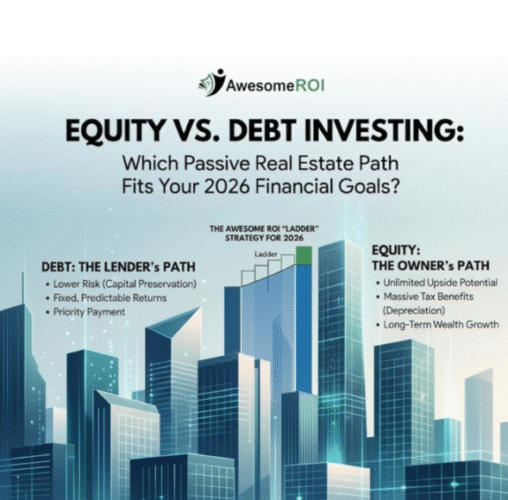
- Lower Risk (Capital Preservation): Your investment is typically secured against the property, reducing downside exposure.
- Fixed, Predictable Returns: You earn consistent interest payments, making it easier to forecast income.
- Priority Payment: Debt investors are paid before equity investors, adding a layer of security.
Best For:
Investors looking for steady cash flow, lower volatility, and short-to-mid-term commitments.
Equity Investing: The Owner’s Path
Equity investing is designed for those who want to maximize long-term wealth and upside potential.
Key Benefits:
- Unlimited Upside Potential: Returns grow with property appreciation and performance.
- Massive Tax Benefits: Depreciation and other incentives can significantly reduce taxable income.
- Long-Term Wealth Growth: Ideal for building substantial net worth over time.
Best For:
Investors willing to take on more risk in exchange for higher returns and long-term gains.
The Awesome ROI “Ladder” Strategy for 2026
Rather than choosing one over the other, smart investors are increasingly adopting a hybrid approach.
Our Ladder Strategy allows you to:
- Start with debt investments for stability and consistent income
- Gradually transition into equity deals for higher growth
- Build a balanced portfolio that evolves with your risk tolerance
This strategy ensures you’re not overexposed to risk while still capturing high-return opportunities.
Which Strategy Fits Your 2026 Financial Goals?
Ask yourself:
- Do you want predictable income or long-term wealth creation?
- Are you comfortable with market fluctuations, or do you prefer stability?
- Is your priority capital preservation or aggressive growth?
Your answers will determine whether debt, equity, or a combination of both is the right fit.
How Awesome ROI Helps You Maximize Returns
At Awesome ROI, we go beyond simply offering deals we actively manage and operate investments to ensure optimal performance.
What sets us apart:
- Carefully vetted, high-ROI opportunities
- Active asset management
- Transparent reporting and investor support
- Strategic portfolio structuring (like the Ladder approach)
Our goal is simple: help you invest smarter and grow faster.
Ready to Build Your 2026 Investment Strategy?
Whether you’re leaning toward stable income or high-growth opportunities, the right strategy can make all the difference.
Let’s find the path that fits your goals.
FAQs
What is safer: equity or debt investing?
Debt investing is generally safer due to fixed returns and priority repayment, while equity carries more risk but offers higher upside.
Can I invest in both equity and debt at the same time?
Yes and it’s often the smartest approach. A balanced portfolio reduces risk while maximizing returns.
How long should I stay invested?
Debt investments are usually shorter-term, while equity investments require a longer hold period for maximum gains.
Do equity investments always outperform debt?
Not always. While equity has higher potential, it depends on market conditions, asset performance, and timing.
What’s the best strategy for beginners?
Starting with debt investments for stability and gradually moving into equity is a common and effective approach.

Recent Posts

Why Branded Hotel Investing Is Making a Comeback in Arizona
Why Phoenix Flex Warehouse Space Is in High Demand